


Building A Gym That People Never Want To Leave
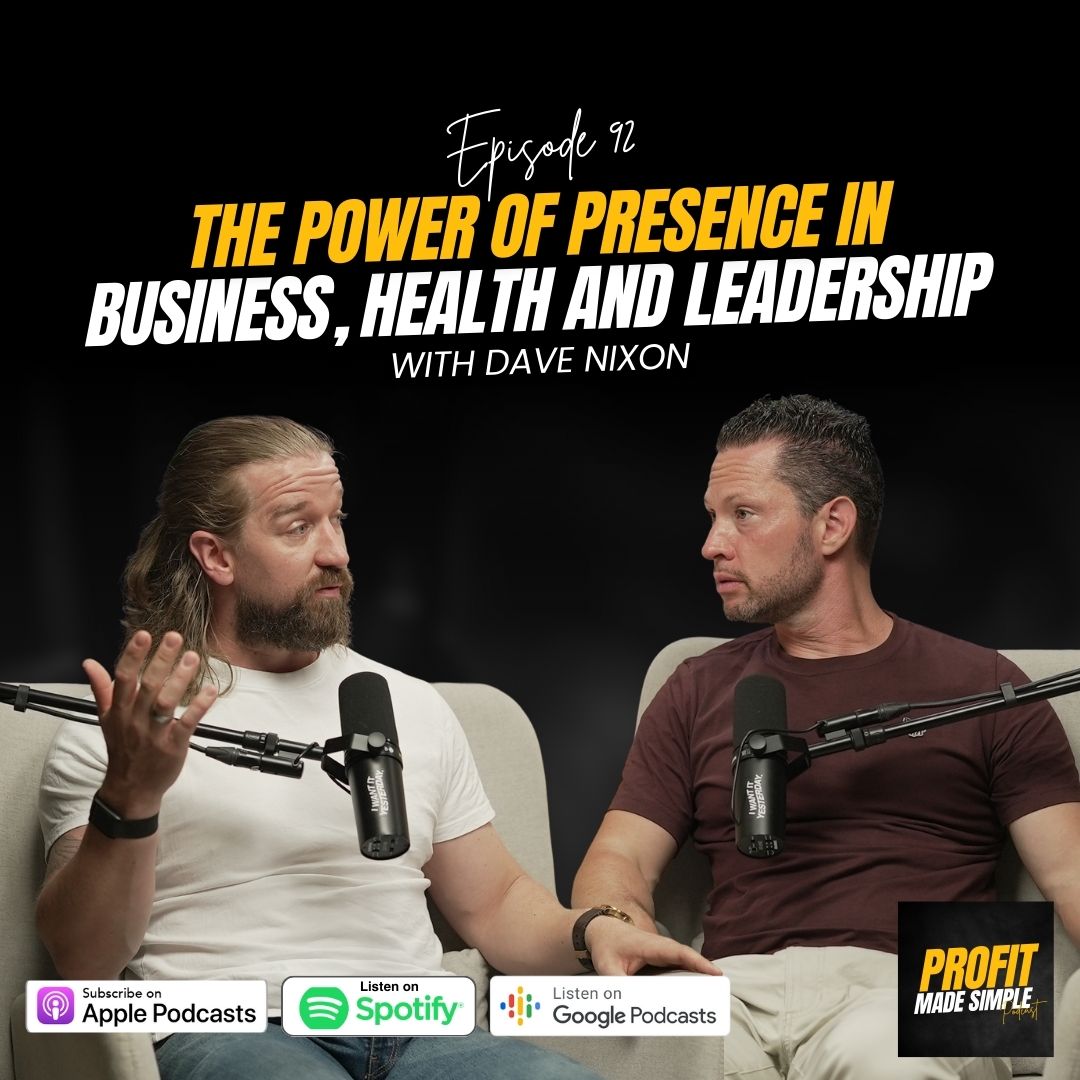
In this episode of Profit Made Simple, I sat down with Dave Nixon, a long-time gym owner, coach, TEDx speaker and high-performance mentor. Dave’s journey through the fitness industry spans more than two decades, and it is filled with lessons every gym owner needs to hear.
This conversation is not about hacks, funnels or flashy marketing tactics. It is about building a gym and a business that actually lasts, one that people feel deeply connected to and never want to leave.
If you have ever felt trapped by your own business, burnt out by trying to run your gym the way you think it “should” look, or frustrated that growth feels harder than it needs to be, this episode will challenge how you think about success in the fitness industry.
Starting Early and Learning the Hard Way
Dave entered the fitness industry at just 15 years old through work experience at a local gym in Canberra. What started as cleaning floors quickly turned into managing members, building relationships and learning how people actually behave in a training environment.
By his late teens, Dave was managing multiple gyms. On paper, it looked like success. In reality, there was a ceiling.
There was no real pathway to ownership, autonomy or creative control. That frustration eventually pushed him to do what many gym owners do. He bet on himself.
At 21, Dave started his own facility out of the corner of a martial arts gym with six clients. No big plan. No safety net. Just commitment.
What followed were years that most people never see. Owning two facilities, paying himself below minimum wage, sleeping in gyms, cars and houses he was minding, and surviving on discounted tins of tuna.
These were not glamorous years, but they were formative. They forced Dave to confront his blind spots, particularly around trust, leadership and decision making.
One of the biggest lessons he learned was this: early on, he trusted other people because he did not trust himself. Later, he learned to trust others because he trusted himself.
That shift changed everything.
The Best Gyms Are Not Just Gyms
One of the most powerful insights Dave shared came from spending time in the United States, training and learning from some of the most influential gyms in the world.
What he noticed was simple but profound.
The best gyms were not just gyms.
They were education businesses. Equipment brands. Media companies. Communities. Gyms were only one part of a much bigger ecosystem.
They were not desperate for clients. They were not reliant on constant promotions. They had depth.
This idea fundamentally changed how Dave thought about his own facility.
Rather than trying to copy what everyone else was doing, he leaned into building something unique. A gym that felt more like a sit-down restaurant than a fast food outlet.
No uniforms. No reception desk. No slogans on the wall. No signage outside.
Clients walk in and feel like it is their space, not a business they are visiting.
This is a powerful reminder for fitness business owners. Differentiation does not come from louder marketing. It comes from clarity and conviction.
Why Enjoyment Matters More Than You Think
One of the biggest traps gym owners fall into is designing a business they hate.
They follow industry rules. They copy models. They chase what the gurus say works. Slowly, the business starts to feel heavy.
Dave was honest about this. When he tried to run his gym the way he thought he was supposed to, he did not enjoy it. That lack of enjoyment bled into how he showed up as a leader, the coaches he hired and the culture that formed.
Everything changed when he made a simple decision.
If he enjoyed the business, the coaches would enjoy it. If the coaches enjoyed it, the clients would enjoy it.
That energy cascades.
This is a crucial lesson for gym owners. Your energy is contagious. If you feel trapped, exhausted or resentful, your team and members feel it too.
A business that aligns with your values is not selfish. It is strategic.
People Over Programs Always Win
Another recurring theme in this episode was people.
Dave summed it up perfectly when he said he is not in the health industry teaching people. He is in the people industry teaching health.
This mindset shift explains why his gym has clients who have stayed for 10 to 15 years. People do not stay because of programs alone. They stay because of relationships, trust and belonging.
Dave intentionally built a community of contributors, not consumers.
Contributors take ownership. They bring friends. They protect the culture. They show up even when motivation is low.
This is one of the biggest drivers of retention in fitness businesses. When members feel like they belong, price becomes secondary.
Presence And Performance in Business and Life
Beyond gym ownership, Dave’s work now focuses on high performance coaching through BSFT
His philosophy is simple but powerful. Help people be present in the small moments and perform in the big moments.
Many people think presence means trying harder, removing distractions or forcing focus. Dave challenges that idea.
Presence is not something you add. It is something you uncover by removing what gets in the way.
Old patterns, unresolved beliefs and unconscious habits pull us out of the present moment. When those are addressed, presence flows naturally.
For gym owners, this matters deeply. Presence improves leadership, communication and decision making. It also directly impacts client experience.
A present coach connects better. A present owner leads better. A present business performs better.
Coaching Independence Not Dependence
One of the most important topics Dave raised was the difference between helping and creating dependence.
In the fitness industry, it is easy to create clients who rely on the coach for everything. Programs. Motivation. Accountability.
Short term, this feels successful. Long term, nothing changes.
Dave described two types of clients. Those who are told what to do, and those who are taught how to think.
The second group builds skills, confidence and autonomy. They progress steadily over years, not weeks. They take ownership of their health and pass those behaviours on to others.
This concept applies directly to gym ownership. Are you building a business that depends on you, or one that develops people?
True success is teaching clients and staff to stand on their own.
The Real Measure of Success in Fitness Business
As the conversation wrapped up, Dave shared one final insight that every fitness business owner should sit with.
You are your own bottleneck.
Growth, income and impact all flow downstream from your ability to lead yourself. The habits you build, the beliefs you hold and the standards you accept shape everything else.
A gym is not just a business. It is a reflection of the owner.
When you change, the business changes.
That is confronting, but it is also empowering.
If you want to build a fitness business that lasts, attracts the right people and gives you freedom instead of burnout, this episode is one you need to listen to carefully.
And if this conversation resonated, take a moment to ask yourself one simple question:
Are you building your gym the way you think it should look, or the way it needs to feel?
That answer changes everything.

Leave A Comment