


What the Data Is Telling Us About the Future of Fitness
One of the greatest challenges in business is separating opinions from reality.
Every day, fitness business owners are bombarded with advice, predictions, social media trends, and industry commentary. Everyone seems to have a strong view on what is working, what is dying, and where the industry is heading next.
The problem is that opinions can be misleading. Data tells the truth.
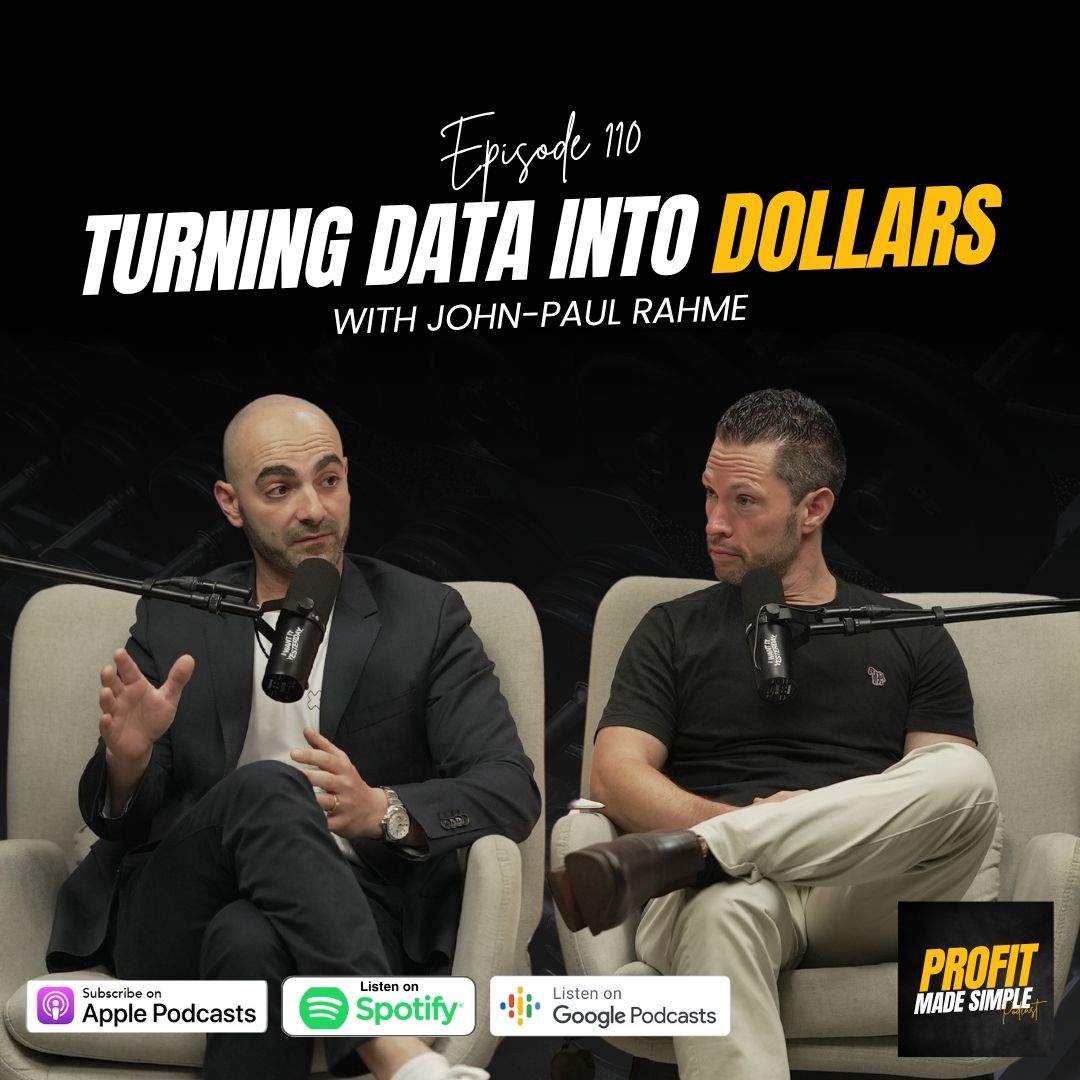
That is why I was excited to sit down with John-Paul Rahme, founder of Xoda, on the latest episode of ‘Profit Made Simple’. Through Xoda, John-Paul has a unique vantage point, seeing behind the scenes of thousands of fitness businesses across multiple countries while having deep conversations with owners, operators, and industry leaders every single day.
What emerged from our conversation was clear. Consumer behaviour is changing, expectations are evolving, and the businesses that adapt will thrive while those that resist change will find themselves increasingly challenged. Here are some of the biggest insights from that conversation.
The Rise of Wellness Over Aesthetics
One of the strongest trends emerging from the data is the shift from aesthetics to wellness.
For years, the fitness industry was heavily driven by weight loss, body transformations, and appearance-based marketing. While those goals remain important to many consumers, they are no longer the primary driver for younger generations entering the market.
According to John-Paul, Gen Z is becoming the dominant consumer group within health and fitness, and they approach it very differently to the generations before them. They are increasingly motivated by mental health, stress management, energy levels, longevity and overall performance rather than how they look. The question has shifted from “How do I look?” to “How do I feel?”
That shift has significant implications for how fitness businesses position themselves. If your marketing and messaging are still exclusively focused on weight loss and aesthetics, there is a growing risk that you are becoming less relevant to a large and fast-growing segment of the market. The businesses winning today are broadening their value proposition, positioning themselves as vehicles for better health, better energy, better mental wellbeing, and a better quality of life.
Why Community Is Becoming More Important Than Ever
Community was a theme that kept surfacing throughout our conversation, and for good reason. Consumers today are more digitally connected than at any point in history, yet many feel increasingly disconnected in real life. That tension creates a genuine opportunity for fitness businesses that are willing to lean into it deliberately.
The most successful facilities are no longer simply places where people exercise. They are places where people belong. Members are not just paying for workouts. They are paying for connection, accountability, relationships, support and a sense of identity that they struggle to find elsewhere.
This is one of the key reasons boutique fitness continues to perform so well despite increasing competition. When members become emotionally attached to the community they are part of, retention improves dramatically and the business becomes far more resilient. The lesson here for business owners is straightforward. Stop viewing community as a by-product of your service and start treating it as a core strategic advantage.
Consumer Expectations Have Changed Dramatically
Another major trend John-Paul highlighted is the dramatic shift in what consumers now expect from their fitness experience. Today’s members are not comparing your gym against the facility down the road. They are comparing you against Uber, Netflix, and Amazon. They are benchmarking you against every seamless, frictionless digital experience they encounter in their daily lives, and they expect the same standard from you.
Convenience has become a genuine competitive advantage. Members expect easy booking systems, seamless communication, fast response times, user-friendly technology and personalised experiences. Businesses that fail to meet these expectations risk creating the kind of frustration that pushes members toward operators who take these things seriously.
It is no longer enough to deliver a great workout. The entire experience around that workout needs to match the standard your members hold everywhere else in their lives.
Why Behaviour Change Is the Metric That Matters Most
One of my favourite moments in the conversation came when John-Paul shared what he believes is the single most important metric a fitness business should be tracking. Not leads. Not revenue. Not membership numbers. Behaviour change. This is a profound shift in thinking and one that most fitness businesses have not fully embraced yet.
Too many operators become obsessed with vanity metrics, focusing on how many members they have, how much revenue they generate, or how many leads entered the funnel. Those numbers matter, but they are outcomes. The deeper question is whether you are actually changing the behaviour of your members. Are they exercising more consistently? Are they becoming healthier? Are they making better choices outside the gym?
Because when genuine behaviour change occurs, everything else follows. Results improve, retention strengthens, referrals increase, and community deepens. The most successful fitness businesses understand that their real product is not workouts. It is behaviour change, and everything they do is built around delivering that outcome.
AI Is Not Coming — It Is Already Here
Few topics generate more conversation in the fitness industry right now than artificial intelligence. For many business owners, AI still feels like something sitting on the horizon, something to think about later. The reality is very different. AI is already transforming the way fitness businesses operate, and the gap between early adopters and everyone else is widening.
John-Paul shared how Xoda is actively integrating AI across predictive analytics, customer insights, automation, reporting and business intelligence. The opportunity this creates for fitness business owners is not about replacing human coaches or removing the personal touch that makes great gyms great. It is about making coaches and owners more effective.
Imagine being able to identify members at risk of cancelling before they do. Imagine analysing attendance patterns to predict retention challenges weeks in advance, or receiving actionable recommendations based on real-time data rather than gut feel. That is where AI is creating enormous value right now, not by replacing people, but by helping people make better decisions faster.
The Businesses That Win Will Be Data-Driven
Historically, many fitness businesses were run largely on intuition. Owners made decisions based on gut feel, experience, or assumptions about what their members wanted. While intuition remains valuable, the future belongs to operators who combine that intuition with real data.
The businesses growing fastest are increasingly using data to answer the critical questions that determine long-term success. Which members are at risk? Which marketing channels are actually performing? What drives retention and referrals? Which services generate the highest lifetime value? Data provides clarity, and clarity allows better decision-making. As competition continues to increase across the industry, that clarity becomes less of a nice-to-have and more of a genuine competitive requirement.
The Importance of Adaptability
One of the overarching themes from our conversation was adaptability. The fitness industry has always evolved, but the speed of that change is accelerating. Consumer behaviour, technology, marketing and competitive dynamics are all shifting faster than most operators are comfortable with. The businesses that thrive are rarely the biggest or the longest established. They are the ones that adapt fastest.
This does not mean chasing every shiny object or pivoting your model every six months. It means staying genuinely curious, paying close attention to what the data and your members are telling you, and being willing to evolve when the evidence suggests change is necessary. The operators who remain flexible will continue to find opportunity even in challenging markets, while those who cling to what has always worked may find the ground shifting underneath them.
Success Still Takes Time
Perhaps the most important reminder from our conversation had nothing to do with technology, AI, or consumer trends. It was about patience. We live in a world obsessed with overnight success, and social media does a convincing job of making rapid growth look effortless. The reality for most successful businesses is very different.
John-Paul spoke candidly about Xoda’s growth and how much of the current momentum is the result of years of product development, relationship building, problem solving, and relentless refinement. The same applies to fitness businesses. You can do all the right things today, but time still plays a role.
Momentum compounds, trust compounds, brand equity compounds, and results compound. The businesses that stay consistent long enough are usually the ones that ultimately win.
Final Thoughts
What I enjoyed most about this conversation was that it was grounded in reality rather than hype or speculation. The data is telling us that consumers are prioritising wellness over aesthetics, seeking genuine community and connection, expecting better experiences, and increasingly embracing technology as part of their fitness journey.
For fitness business owners, that presents both a real challenge and a significant opportunity. The businesses that understand these shifts and respond with intention will be exceptionally well positioned for the years ahead. The future of fitness belongs to those who create meaningful behaviour change, leverage technology intelligently, build strong communities, and never stop evolving.


Leave A Comment