


Why Niching Your Fitness Business Is the Fastest Path to Growth
One of the biggest mistakes I see fitness business owners make is trying to be everything to everyone.
They offer weight loss, strength training, athletic development, rehabilitation, bootcamps, kids’ fitness, seniors’ classes and nutrition coaching.
On paper it sounds like they are increasing their opportunities. In reality, they are making it harder for anyone to understand why they should choose them.
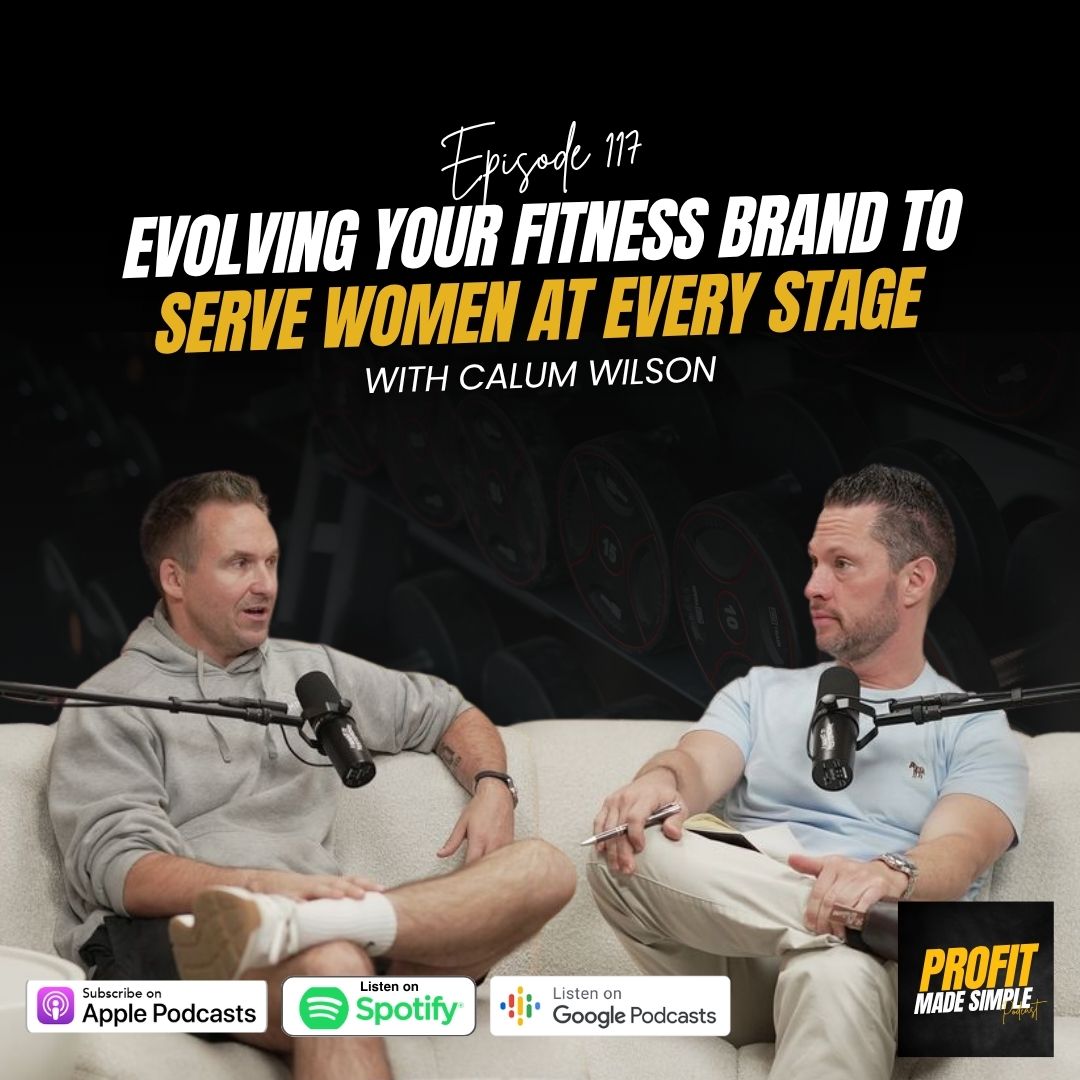
I recently sat down with Calum, founder of BUMP Health and Fitness, on the ‘Profit Made Simple’ podcast, and his story reinforced something I have believed for a long time. Businesses do not grow because they try to serve more people. They grow because they become exceptionally good at solving one specific problem. The fitness industry rewards specialists, not because they exclude people, but because they are remembered.
The Biggest Mistake Fitness Business Owners Make
When I ask gym owners who their ideal client is, the answer is almost always some version of “anyone who wants to get fit.” It sounds inclusive. In practice, it is nearly impossible to build a compelling business around.
Think about your own buying behaviour for a moment. If you had persistent shoulder pain, would you rather see a general physiotherapist or someone who specialises in shoulders? If your child needed orthodontic treatment, would you choose a general dentist or an orthodontist? People naturally trust specialists, and fitness is no different. When your business becomes known for solving one problem better than anyone else, referrals increase, your marketing gets sharper, and prospects arrive already believing you are the right choice.
Why Generalists Become Invisible
The fitness industry has never been more crowded. Most gyms look remarkably similar. The same equipment, the same class formats, the same introductory offer, and the same promise of helping people lose weight or get fit. When everyone says the same thing, nobody stands out.
This is where niche positioning changes everything. Specialisation gives people a reason to remember you. It gives your existing members a story to tell when someone asks where they train. Instead of saying “I go to a gym,” they say “I go to the gym that specialises in…” That one sentence is more powerful than most marketing campaigns.
How Calum Built BUMP Around One Customer
One part of my conversation with Calum really stood out. He did not wake up one morning with a plan to build a nationwide business. He spent years working as a personal trainer and kept noticing the same pattern. Most of his clients were women who were pregnant or had recently had children, and they were not being adequately supported anywhere else. Rather than treating that as a side note, he leaned into it completely.
His business coach challenged him to stop trying to serve everybody and commit to becoming known for one thing. That decision changed the trajectory of everything that followed.
Calum immersed himself in education, built genuine relationships with healthcare professionals, and developed systems designed specifically around pre and postnatal women.
That knowledge eventually became BUMP, a business that now operates across multiple locations in Australia not because the concept was generic, but because it solved a very specific problem exceptionally well.
Specialisation Creates Better Products
One of the things I admired most about BUMP was not the branding. It was how deeply every part of the business reflected the actual needs of its members. Strength training and reformer Pilates were not added because they were trending. They were selected because they genuinely complement each other during pregnancy and postpartum recovery. The childcare offering was not an afterthought either. Spaces were designed differently depending on the age of the children, because that level of detail is what makes mothers feel truly comfortable and understood.
Even the workshops, the community and the education were built around the same customer. Nothing was random. When you genuinely understand one person and one problem, your business naturally becomes more valuable. That depth is almost impossible to achieve when you are trying to cater for everyone at once.
Your Marketing Gets Easier
One of the less obvious benefits of niching is what it does to your marketing.
Instead of creating generic content about health and fitness, you start answering very specific questions that your audience is already searching for. Your advertising improves because you are speaking directly to one group of people rather than casting a wide net and hoping something lands. Your referrals improve because your members know exactly who to send your way. Your website becomes clearer, your social media becomes easier to plan, and your messaging becomes consistent across every channel.
When everything in your business revolves around solving one problem, that clarity shows up in every piece of content you put out. Consistency is the byproduct of focus, and focus is what most fitness businesses are missing.
Scaling Becomes Simpler
Many business owners assume that niching limits their growth potential. In my experience, the opposite is almost always true.
Once you have developed systems that consistently deliver results for one type of customer, those systems become repeatable. That is exactly what happened with BUMP. Years were spent refining the concept before any serious expansion happened. The programming, the coaching standards, the onboarding process, the member journey, the education framework, all of it was systemised before growth accelerated. That is a far stronger foundation than trying to scale a business that is still changing direction every few months.
You Do Not Need a Bigger Market
A concern I hear regularly from fitness business owners considering a niche is that the market might be too small. It is a fair question, but it misunderstands how local fitness businesses actually work. Most gyms do not need millions of potential clients. They need enough of the right ones. Being the obvious choice for a thousand people in your area is far more valuable than being vaguely known by a hundred thousand. The businesses that dominate local markets are rarely the ones offering the most services. They are the ones known for doing one thing exceptionally well.
How to Find Your Own Niche
Choosing a niche does not mean chasing the latest trend. More often than not, the answer is already sitting inside your existing business. Start by asking yourself a few honest questions. Which clients do you enjoy working with the most? Which clients get the best results? What problems do people already seek your advice about? Where have you built the deepest experience? What gap exists in your local market that nobody is filling well?
Your niche is usually already there. You just have not committed to owning it yet. And choosing a niche does not mean saying no to everyone else forever. It means becoming known for something first. Expansion is far easier once you have established real authority in one area.
Final Thoughts
What I took away most from my conversation with Calum is that successful businesses rarely happen by accident. They make deliberate choices. Instead of trying to appeal to everyone, BUMP chose one audience and built every single part of the business around serving them exceptionally well. That focus is what made it scalable, memorable and genuinely difficult for anyone else to replicate.
If your marketing feels hard right now, if your referrals have slowed down, or if your business feels like it blends into everything else around it, the answer is probably not more advertising. It is more focus. Sometimes the fastest way to grow is not to do more. It is to become known for one thing and own it completely.

Leave A Comment